
What is Jet Lag? A Sleep Doctor’s Guide to Beating Time Zones



Ever stepped off a long-haul flight feeling like you’ve been hit by a truck? You know that foggy, exhausted sensation where your body screams for sleep at 2pm whilst everyone else is having lunch? That’s jet lag for you – one of travel’s most unwelcome companions.
Jet lag happens when your body’s internal clock gets completely out of step with the time zone you’ve just landed in. Your circadian rhythm is still stuck back home whilst you’re trying to function somewhere entirely different.
The symptoms hit you pretty quickly too. Within a day or two of crossing at least two time zones, you’ll likely experience disturbed sleep, daytime fatigue, fuzzy thinking, and those persistent headaches. Your mood and concentration take a real battering as well.
Here’s what you need to know about recovery: it takes roughly one day per time zone crossed to get back to feeling human again. But there’s a catch. Flying eastward is significantly harder on your body than heading west. Eastward travel tends to drag out those miserable symptoms for longer.
Whether you’re planning your next adventure or currently battling post-flight exhaustion, this guide will walk you through everything about jet lag. You’ll discover what causes it, why some flights leave you feeling worse than others, and most importantly, how you can beat it at its own game.
What is jet lag and why does it happen?
Jet lag – or jet lag disorder if you want to get technical about it – is essentially a temporary sleep problem that strikes anyone who hops across multiple time zones quickly. The trouble is, whilst you’ve physically moved to a new location, your body’s internal clock is still stubbornly stuck back home.
Now that you know what jet lag feels like, let’s explore the fascinating science behind why it turns your body into such a confused mess.
How your body clock works
Think of your body as running on a sophisticated 24-hour internal timepiece called your circadian rhythm. This biological clock doesn’t just control when you feel sleepy – it orchestrates everything from your body temperature and hormone levels to your digestion, ody clock heart rate, and blood pressure.
The master control centre for all this? A tiny region in your brain called the suprachiasmatic nucleus, or SCN for short. You’ll find it tucked away in your hypothalamus.
Your SCN contains roughly 20,000 specialised cells that work as biological pacemakers. These clever cells constantly monitor light signals coming through photosensitive cells in your retinas. Your brain then uses this light and darkness information to keep your internal clock perfectly synchronised with the natural day-night cycle.
Here’s where it gets interesting: your body clock relies heavily on melatonin, a hormone that rises when darkness falls to prepare you for sleep. This intricate system usually keeps all your bodily functions working in perfect harmony with the outside world.
What happens when you cross time zones
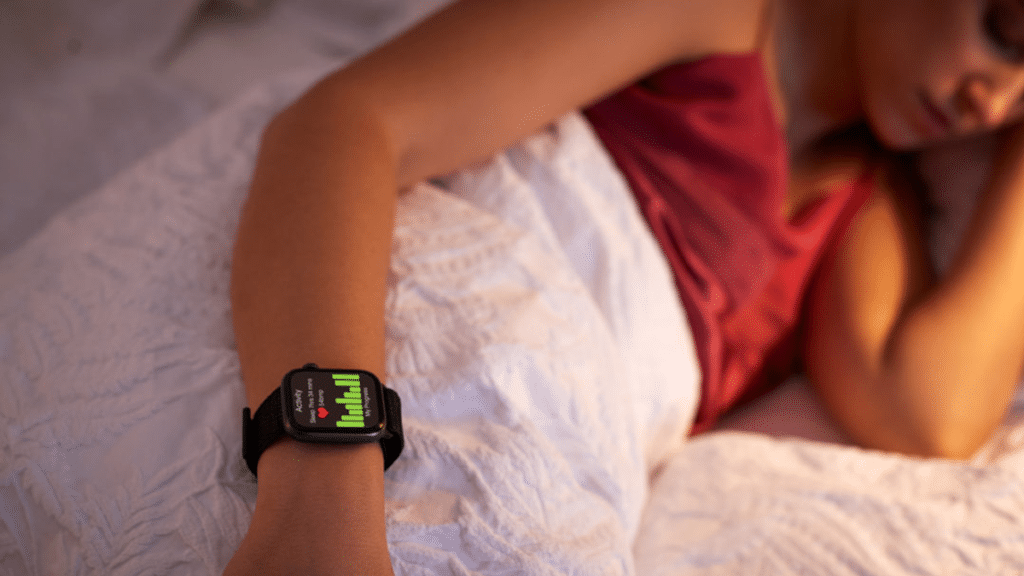
Cross three or more time zones, and your internal body clock suddenly finds itself completely misaligned with local time. Scientists call this “desynchronisation” – essentially, your body remains on “home time” whilst you’re physically somewhere completely different.
The real problem is that different bodily processes adapt at different speeds, which explains why jet lag feels so awful. Your sleep-wake cycle, hunger patterns, digestive schedule, alertness levels, and mood regulation all fall out of step with each other.
Picture this scenario: you’ve just flown from New York to Paris, landing at 7am Paris time. Your internal clock still thinks it’s 1am New York time. Whilst Parisians are grabbing their morning coffee, your body is convinced it’s the middle of the night and desperately wants deep sleep, not breakfast. No wonder you feel exhausted when you should be alert, and wide awake when you should be sleeping.
East vs. west travel: which is harder?
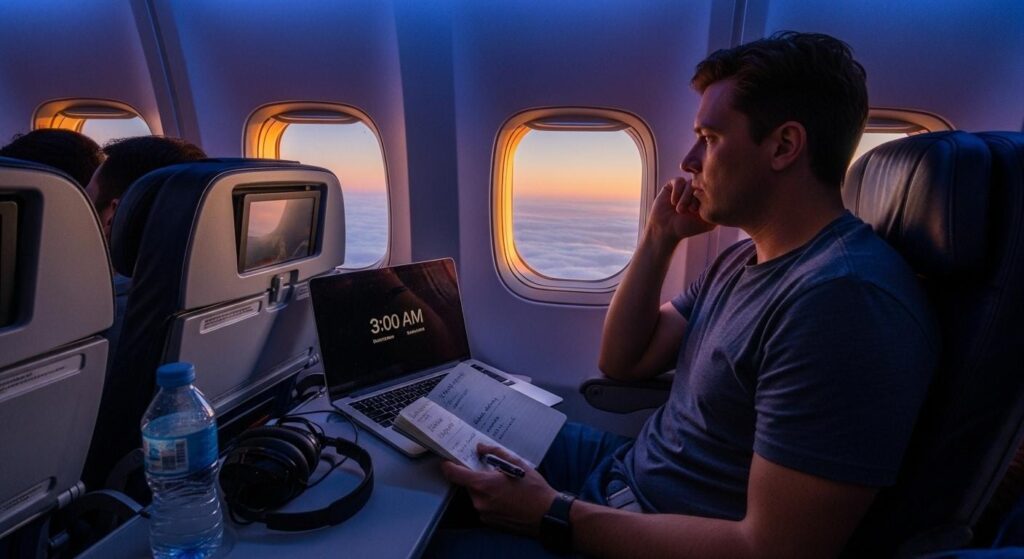
Here’s something fascinating – medical experts consistently find that flying eastward causes more severe jet lag than westward travel. This isn’t just coincidence; it’s pure biology.
Roughly 75% of people have a circadian clock that naturally runs slightly longer than 24 hours. Most humans already drift slightly later each day. This biological fact explains everything:
- Flying west: You’re extending your day, which aligns perfectly with your body’s natural tendency to drift later
- Flying east: You’re forcing your body to advance its clock earlier, fighting against its natural rhythm
Consider these examples: travelling from New York to Los Angeles means staying up just 3 hours later than normal – something most bodies handle quite easily. But flying from New York to Paris? That requires going to bed 6 hours earlier than usual, a much tougher ask for your circadian system.
The research proves this difference is substantial. Your body adjusts at roughly 92 minutes per day after westward flights, but only about 57 minutes per day following eastward travel. A 9-hour eastward time shift proves particularly brutal, requiring several extra recovery days compared to the same westward journey.
Remember the one-day-per-time-zone rule? Direction of travel significantly affects how quickly your body can actually reset its clock.
What jet lag actually feels like in your body
Jet lag doesn’t just make you tired – it turns your entire system upside down. A recent survey found that 68% of international business travellers regularly battle these symptoms, which shows just how universal this travel curse really is. Recognising what’s happening to your body helps you tackle it head-on.
Sleep chaos and wide-awake nights
Sleep becomes your biggest enemy when jet lag hits. You’ll collapse into your bed completely shattered, only to find yourself staring at the ceiling for hours. Or worse – you finally drift off, then ping wide awake at 3am like someone’s flicked a switch.
Even when sleep does come, it’s rubbish quality. You toss and turn, never quite reaching that deep, restorative sleep your body desperately needs.
These sleep disturbances typically kick in within a day or two of crossing at least two time zones. Your body stubbornly refuses to accept local bedtime, especially after eastward flights where you’ve “lost” several hours. It’s still convinced it should be wide awake when everyone else is settling down for the night.
Daytime fog and mental muddle
The daytime symptoms can be just as brutal. You’ll feel like you’re wading through treacle – that overwhelming fatigue that makes even simple tasks feel mountainous. But it goes beyond just feeling knackered.
Your brain simply won’t cooperate. You might find yourself:
- Struggling to focus on the simplest conversations
- Forgetting things you’d normally remember easily
- Unable to think as sharply as usual
- Living in a constant mental haze
These cognitive effects genuinely impact how you function, whether you’re trying to enjoy your holiday or nail that important business presentation. Don’t underestimate how much jet lag can temporarily dim your mental lights.
Digestive system rebellion
Your gut has its own internal clock, which explains why jet lag wreaks havoc on your digestive system. You might experience:
- Constipation or unexpected bathroom emergencies
- Uncomfortable bloating and indigestion
- Waves of nausea at odd moments
- Bizarre hunger pangs or complete loss of appetite
Some experts call this “gut lag” – your liver and digestive organs stubbornly stick to home time whilst you’re trying to function in a new zone. You’ll wake up at 4am craving a full breakfast, or feel completely put off food when you should be hungry. Your digestive organs simply haven’t received the memo about your new location.
Emotional ups and downs
Jet lag doesn’t just mess with your body – it can turn you into someone you barely recognise emotionally. Studies show that mood changes are a significant part of the jet lag experience. You might notice:
- Snapping at people more easily than usual
- Feeling anxious about things that wouldn’t normally bother you
- A low mood that seems to come from nowhere
- Just feeling “wrong” in your own skin
There’s solid science behind these emotional wobbles. Jet lag ramps up stress hormones like cortisol, keeping your nervous system on edge. Research specifically shows that eastward flights can heighten anxiety and depression.
The good news? Recovery time follows that familiar pattern – roughly one day per time zone for eastward travel, slightly less for westward journeys. Everyone’s experience differs though, depending on your age, how you travel, and how sensitive you are to these disruptions.
What’s actually happening inside your body?
Behind all that foggy thinking and sleep chaos lies some pretty remarkable biology. Jet lag stems from your body’s internal timekeeping system getting completely scrambled – a complex network controlled by specialised cells tucked deep inside your brain.
Your body’s master clock
Meet the suprachiasmatic nucleus, or SCN for short. This tiny region in your hypothalamus is basically the boss of your entire circadian rhythm. Picture it as the conductor of a biological orchestra – roughly 20,000 pacemaker cells working together to coordinate every single daily process in your body. Sleep timing, hormone release, even when you feel hungry – the SCN orchestrates it all to keep you in sync with the 24-hour day-night cycle.
Here’s where it gets interesting. Every single cell in your body contains its own molecular clock. Your liver cells, skin cells, immune cells – they all have tiny timepieces that respond to signals from your SCN. This intricate network explains why jet lag hits you so completely, affecting everything from your sleep patterns to your digestion and immune system.
Why light controls everything
Scientists have a fancy German word for this: “zeitgeber,” meaning “time-giver.” These are environmental cues that help sync your biological clock to the outside world. Light is by far the most powerful zeitgeber your body responds to.
Your eyes contain special photoreceptors called intrinsically photosensitive retinal ganglion cells. These clever cells detect light and send signals straight to your SCN via a pathway called the retinohypothalamic tract. This light information triggers changes in your clock genes and starts shifting your biological rhythms.
Timing is everything with light exposure. The Phase Response Curve shows us exactly when light helps or hinders. Get light early in the night? Your rhythms delay, making you stay up later. Light in the late night or early morning? Your rhythms advance, helping you wake up earlier.
You don’t need blazing sunshine either. Standard office lighting at 180 lux can reset your circadian rhythms when timed properly. This sensitivity explains why managing light exposure is crucial for beating jet lag.
The double whammy effect
Want to understand why jet lag feels so awful? It’s actually a “double desynchronisation” hitting you simultaneously.
First, your internal clock becomes completely misaligned with your new environment. Land in Tokyo from London? Your SCN stubbornly sticks to London time whilst Tokyo marches to its own beat.
Second, your central clock and peripheral clocks fall out of step with each other. Your SCN might start adjusting to Tokyo time, but your liver, kidneys, and digestive organs adapt at completely different rates. This internal chaos explains why jet lag affects so many different body systems at once.
Research shows that these peripheral clocks take much longer to sync up with local time than your central clock. That’s why you might start sleeping better but still have digestive issues and other lingering symptoms days later.
What makes jet lag hit you harder?
Some flights leave you feeling mildly tired whilst others completely knock you sideways for days. Understanding what makes jet lag worse gives you the power to plan better and potentially avoid the worst of it.
How many time zones are you crossing?
This one’s pretty straightforward – the more time zones you cross, the worse you’ll feel. Crossing fewer than three time zones typically won’t cause major problems. Cross more than three, however, and each additional time zone adds to your misery.
Your recovery follows a predictable pattern: roughly one day per time zone crossed. So that dream trip from London to Tokyo? You’re looking at nine time zones, which means over a week before you’re back to normal. Your body’s different systems don’t all catch up at the same speed either. Your central clock might start adjusting whilst your liver and digestive system are still stuck back home.
Which direction are you flying?
Here’s where it gets interesting. Flying east genuinely is harder than flying west for most people. This isn’t just in your head – there’s proper science behind it.
About 75% of us have internal clocks that naturally run slightly longer than 24 hours. We tend to drift a bit later each day. So:
- Flying west means extending your day – your body actually likes this
- Flying east forces you to cut your day short – your body fights against this
The numbers prove it: you can adapt at about 92 minutes per day after westward flights, but only 57 minutes per day going east.
Does your age matter?
Older travellers often get hit harder by jet lag and need longer to recover. This happens partly because older people find it more difficult to sleep at the “wrong” biological time.
Your natural sleep pattern matters too. Are you a night owl or an early bird? Evening types (that’s about 75% of us) handle westward travel better, whilst morning people (around 25%) might find eastward trips less brutal. Night owls already tend to have poorer sleep quality, which can make jet lag even more challenging.
What about your pre-travel habits?
Sleep deprivation before you travel is like starting a marathon with a broken ankle. You’re already behind before you even board the plane. Stress doesn’t help either – it messes with your normal sleep patterns and makes adjusting to a new time zone much harder.
That airport drink might seem like a good idea, but alcohol is particularly problematic. Sure, it might help you nod off initially, but it absolutely destroys your sleep quality. Both alcohol and caffeine also leave you dehydrated, which makes jet lag symptoms worse.
Caffeine can actually be helpful for staying alert in your new time zone. The trick is timing – have it too close to bedtime and you’ll disrupt your sleep even more. Get the combination wrong – especially on an eastward flight across multiple time zones – and you’re setting yourself up for jet lag that lasts for ages.
How to beat jet lag: strategies that actually work
Time might be the ultimate healer for jet lag, with symptoms usually clearing up within 4-6 days. But who wants to spend nearly a week feeling rubbish? There are proven ways to speed up your recovery and get your body clock back on track much faster.
Master the art of light timing
Light is your secret weapon against jet lag. Used properly, it can reset your internal clock by roughly one hour each day. The trick is knowing when to seek light and when to avoid it.
Flying east? Chase the morning light and dodge evening light. Heading west? Do the reverse – avoid morning light and soak up evening light.
Here’s something most people don’t realise: outdoor daylight delivers 10,000-100,000 lux even on overcast days, whilst indoor lighting typically gives you just 50-250 lux. That massive difference explains why stepping outside soon after landing can fast-track your adjustment to the new time zone.

Your light exposure action plan:
- Switch your watch to destination time the moment you board
- Get outside in natural daylight as soon as you arrive
- Eastward travel: morning light advances your clock
- Westward travel: evening light delays your clock
- Block unwanted light with sunglasses or dim indoor lights
Melatonin: your jet lag ally
Melatonin has been studied extensively for jet lag, and the results are impressive. It can reduce jet lag severity and cut your recovery time by 1-1.5 days.
Timing is everything with melatonin. Take it close to your target bedtime (10pm-midnight) at your destination. Doses between 0.5-5mg work well, with 3mg being the sweet spot for most people. Don’t bother with higher doses – they won’t give you extra benefits. The effectiveness is so reliable that the number needed to treat is just 2.
Get a head start before you fly
Why wait until you land to start adjusting? Begin shifting your sleep schedule 2-3 days before departure:
For eastward flights: Hit the hay 30-60 minutes earlier each nightFor westward flights: Stay up 30-60 minutes later nightly
Don’t forget to adjust your wake-up time too, and get bright light exposure immediately upon waking. This pre-flight preparation can shift your circadian rhythm by roughly 2 hours before you even step on the plane.
Stay hydrated and eat smart
Dehydration makes jet lag symptoms worse. Drink at least 250ml of water for every hour you’re airborne, even if you’re not feeling thirsty. Skip the alcohol and caffeine during your flight – they’ll keep you wired when you need rest and leave you more dehydrated.
Your eating schedule can help reset your body clock too. Eat meals according to your destination’s schedule to help your digestive system sync with local time. Some travellers swear by fasting for 14-16 hours before their first local breakfast.
What you eat matters as well. Stick to light, easily digestible foods when managing jet lag. Foods rich in tryptophan can support melatonin production, whilst magnesium-rich options may help you relax and sleep better in your new time zone.
When natural remedies aren’t enough
Sometimes those tried-and-tested strategies just aren’t cutting it. If you’re still struggling with jet lag symptoms after trying the approaches we’ve discussed, medical help might be worth considering. Don’t worry though – this doesn’t mean you’ve failed. Some people simply need a bit more support to get their body clock back on track.
Prescription sleep medications
For frequent flyers dealing with seriously debilitating jet lag, doctors sometimes prescribe sleep medications. These fall into two main categories: nonbenzodiazepines (zolpidem, eszopiclone, zaleplon) and benzodiazepines (temazepam, midazolam).
Here’s the thing though – whilst these medications can help you sleep better during flights and for several nights afterwards, you might unfortunately still experience those daytime jet lag symptoms. They’re not a complete solution, just one piece of the puzzle.
Understanding the risks
Melatonin gets prescribed for short-term insomnia quite regularly, typically for 1-4 weeks, though specialists might recommend longer courses in certain cases. The good news? Taking melatonin as prescribed makes addiction unlikely.
That said, these medications do come with potential side effects. You might experience drowsiness, headaches, dizziness, and nausea. Never mix sleep aids with alcohol – this combination can cause dangerously deep sleep. Most importantly, don’t drive or operate machinery if these medications make you drowsy or impair your concentration.
When should you see a sleep specialist?
If your jet lag symptoms persist or get worse beyond one week after travel, it’s time to consult a healthcare provider. You should seek medical attention immediately if you develop atypical symptoms like fever, nausea, vomiting, cough, or sore throat – these might indicate conditions beyond simple jet lag.
Remember, medications should only be considered when symptoms are severe. Your body has remarkable adaptive capabilities, and most people recover well with the natural strategies we’ve covered earlier. Sometimes you just need to give yourself a bit more time and patience.
Conclusion
Jet lag doesn’t have to derail your travel plans. Yes, it’s one of those inevitable travel companions, but now you know exactly how to handle it.
Your body’s remarkable ability to adapt just needs the right nudges at the right times. Light exposure remains your secret weapon – get that morning sunshine for eastward trips, evening light for westward journeys. Couple this with well-timed melatonin, and you’re already ahead of the game.
Don’t forget the simple stuff either. Start shifting your sleep schedule a few days before you fly. Stay hydrated throughout your journey. Eat according to your destination’s schedule. These small actions add up to make a real difference in how quickly you bounce back.
The direction you’re flying matters more than you might think. Eastward travel will always be tougher on your system, so give yourself extra time to adjust. Westward? You’ll likely find the transition much smoother.
Most importantly, be patient with yourself. Your circadian rhythm has been keeping perfect time for years – it just needs a few days to catch up with your new location. With the strategies you’ve learned here, you can cut that adjustment time significantly and get back to enjoying your destination.
Ready for your next adventure? Your body clock is too.
Key Takeaways
Understanding jet lag’s biological mechanisms and implementing proven strategies can dramatically reduce your recovery time and travel discomfort.
• Eastward travel is harder than westward – your body naturally runs on a 25-hour cycle, making it easier to delay sleep than advance it by several hours.
• Strategic light exposure is your most powerful tool – seek morning light for eastward travel and evening light for westward journeys to reset your internal clock.
• Start adapting before you travel – gradually shift your bedtime by 30-60 minutes for 2-3 days before departure to reduce jet lag severity.
• Melatonin works when timed correctly – take 0.5-5mg close to your target bedtime at your destination to reduce recovery time by 1-1.5 days.
• Recovery follows the one-day rule – expect approximately one day of adjustment per time zone crossed, though eastward travel may take longer.
The key to beating jet lag lies in working with your body’s natural rhythms rather than against them. By combining proper light management, strategic supplementation, and pre-travel preparation, you can transform what might be a week-long ordeal into a manageable 2-3 day adjustment period.
